
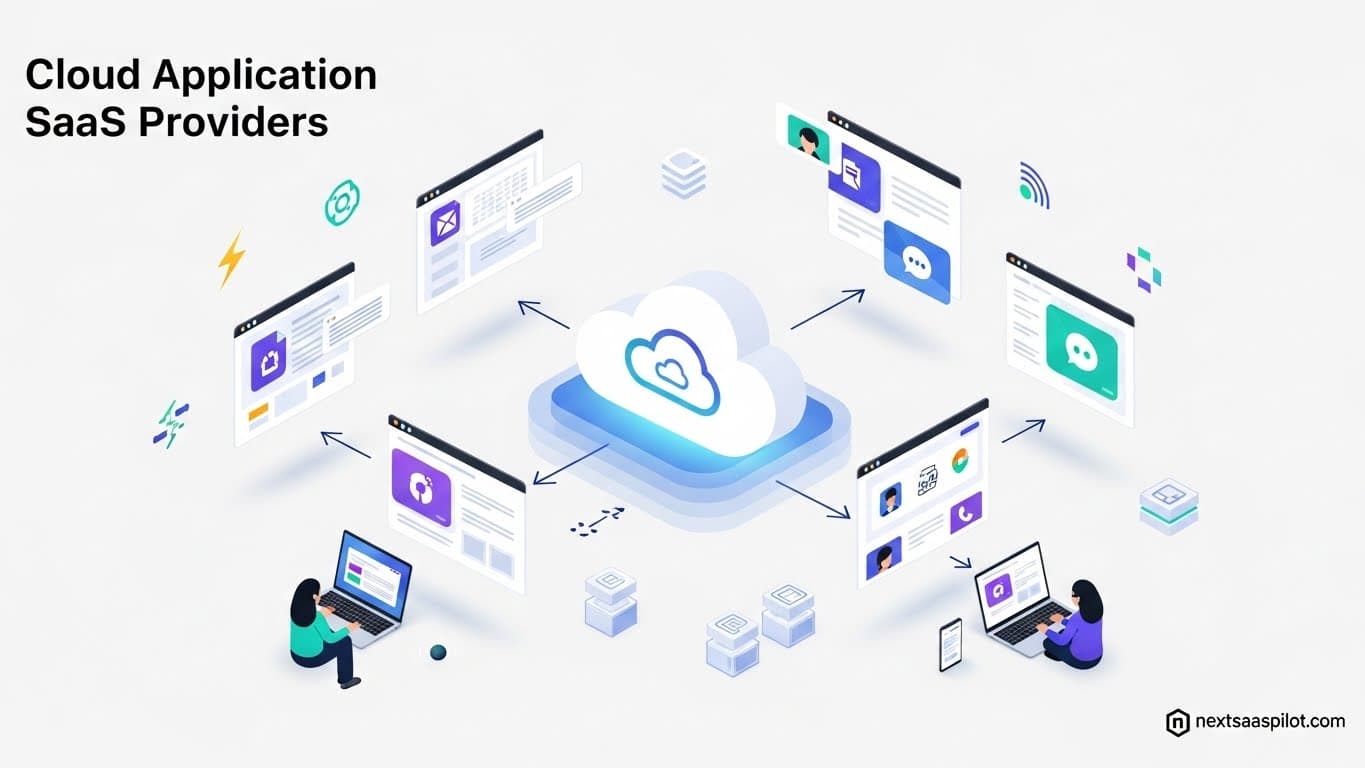
Navigating the ecosystem of cloud application saas providers is the most critical strategic exercise for modern CIOs and founders. We have moved past the era of “cloud adoption” and into the era of “cloud optimization.” In 2025, your tech stack is not just a set of tools; it is the operating system of your business.
I have spent the last decade auditing enterprise software stacks. The difference between a company that scales effortlessly and one that stagnates often comes down to their vendor selection. The best providers don’t just offer software; they offer ecosystems, security, and API-first interoperability. This guide ranks and analyzes the dominant players reshaping the digital landscape.
What Defines a Top-Tier SaaS Provider?
A top-tier SaaS provider delivers high-availability cloud software with multi-tenant architecture, ensuring seamless scalability, robust security compliance (SOC 2), and an open API ecosystem for integration.
To be considered a “provider” in this context, a company must do more than host a website. They must provide the infrastructure of work. When evaluating vendors, I look for three specific traits:
- Uptime SLAs: Do they guarantee 99.99% availability?
- Ecosystem: Do they have a marketplace of plugins (like Salesforce AppExchange)?
- Innovation Rate: How fast do they ship new features?
Understanding the difference between general cloud computing and specific SaaS delivery is vital.
Who Are the Giants of Enterprise SaaS?
Salesforce, Microsoft, and Adobe dominate the enterprise sector by offering comprehensive suites that cover CRM, productivity, and creative workflows, effectively locking in large organizations with their deep integration capabilities.
These are the “Systems of Record.” Once you install them, they become the source of truth for your data.
1. Salesforce
Salesforce is more than a CRM; it is a platform. Through its acquisition of Slack, Tableau, and Mulesoft, it controls the data flow from customer acquisition to retention. Their dominance stems from the AppExchange, which allows b2b saas products to plug directly into their ecosystem.
2. Microsoft 365 (Office 365)
Microsoft transitioned from selling boxed software to becoming the world’s largest SaaS provider by revenue. Teams, SharePoint, and Office constitute the digital office. Their seamless integration with Azure Active Directory makes them the default choice for IT security teams.
3. Adobe Creative Cloud
Adobe pioneered the shift from perpetual licenses to SaaS. They proved that creative professionals would pay a subscription for continuous updates. Their cloud suite now integrates AI (Firefly) directly into the workflow, setting the standard for saas examples in the creative industry.
Which Providers Lead in Collaboration and Communication?
Slack, Zoom, and Atlassian are the leaders in collaboration, fundamentally changing how distributed teams communicate by replacing internal email with channel-based messaging and synchronous video.
The post-2020 world is built on these tools.
- Slack (Salesforce): The “Digital HQ.” It wins because of its developer experience (DX). You can pipe server alerts, sales leads, and support tickets directly into channels.
- Zoom: They won the video war by focusing on one thing: it just works. Low latency and high reliability made them a verb.
- Atlassian (Jira/Confluence): The backbone of engineering. While developers love to complain about Jira, no other tool handles complex agile workflows at the enterprise scale as effectively.
What About Infrastructure Providers Offering SaaS?
AWS, Google Cloud, and Microsoft Azure are primarily IaaS/PaaS providers, but they also offer massive SaaS products like Amazon Connect, Google Workspace, and Azure DevOps to monetize their underlying infrastructure.
It is important not to confuse the host with the application, although the lines are blurring.
- Google Workspace: A pure SaaS play (Gmail, Docs, Drive) running on Google’s infrastructure.
- AWS: Offers SaaS solutions like Amazon Chime (communication) and Honeycode (no-code apps).
These providers leverage their massive data centers to offer SaaS products with unbeatable latency and pricing.
Top SaaS Providers for Small Business Growth
HubSpot, Shopify, and Intuit are the premier choices for small businesses (SMBs), offering “all-in-one” platforms that combine marketing, commerce, and finance without the complexity of enterprise tools.
For an SMB, ease of use is the primary metric.
- HubSpot: They invented “Inbound Marketing.” Their platform scales from a free CRM for startups to a robust enterprise suite, making them a favorite in saas for small business circles.
- Shopify: The operating system for e-commerce. They handle the payments, hosting, and inventory, allowing founders to focus on brand.
- Intuit (QuickBooks): They moved accounting to the cloud, enabling real-time collaboration between business owners and accountants.
Specialized Analytics: SaaS vs. SAS
It is crucial to distinguish between SaaS (the delivery model) and SAS (the analytics company); SAS Institute is a leading provider of advanced analytics software used in data science, which is now delivered via a cloud-native platform called SAS Viya.
I often see confusion in search queries regarding saas vs sas.
- SaaS: Software as a Service (e.g., Salesforce).
- SAS: Statistical Analysis System (A specific company).
SAS Institute has pivoted effectively. They now offer sas statistical software via the cloud, competing with open-source Python/R environments. For enterprises needing heavy-duty data modeling, sas consulting and their software suite remain the gold standard for compliance-heavy industries like banking and pharma.
How to Evaluate a SaaS Provider?
Evaluate providers based on their API documentation, compliance certifications (GDPR/SOC 2), data portability capabilities, and the quality of their customer success teams.
When I vet a vendor for a client, I look at the “Exit Strategy.”
- Data Portability: Can I export my data easily in CSV/JSON format? If not, it’s a trap.
- Integration: Do they have a robust API?
- Support: Do they offer 24/7 support?
This directly impacts the saas experience meaning for your internal team. A bad admin interface or poor support can kill adoption rates.
The Role of AI in SaaS Providers
Leading providers are aggressively integrating Generative AI to automate workflows, such as Salesforce’s Einstein, Microsoft’s Copilot, and HubSpot’s ChatSpot, transforming software from passive tools into active assistants.
In 2025, if a SaaS provider does not have an AI strategy, they are obsolete.
- Generative Text: Writing emails automatically (HubSpot).
- Code Generation: Writing scripts (GitHub Copilot).
- Data Analysis: Summarizing meetings (Zoom IQ).
Conclusion
Selecting the right cloud application saas providers is about building a cohesive ecosystem. Don’t just buy the “best” tool in a vacuum; buy the tool that talks to your other tools.
- For Enterprise: Stick to the “Big Three” (Salesforce, Microsoft, Adobe) for stability.
- For Startups: Lean on HubSpot and flexible tools like Slack and Notion.
- For Data: Understand the distinct value of SAS Institute versus general BI tools.
Your software stack is your competitive advantage. Choose providers that scale with your ambition.